
UV analyses explained …
Detecting surface contamination using UVA radiation
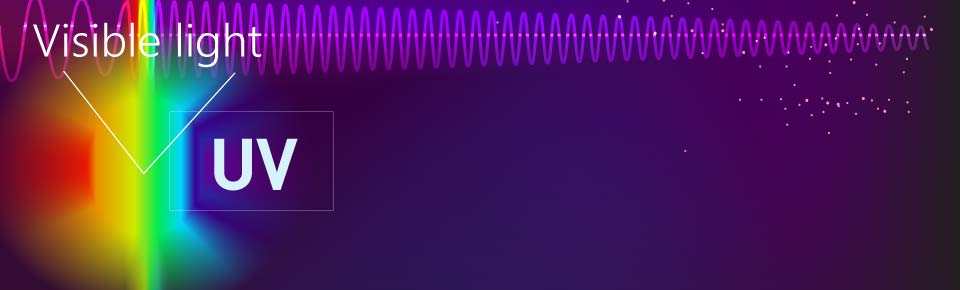
UV analyses are based on the interaction between ultraviolet (UV) light and the analyte. UV radiation has a wavelength of approximately 315–380 nm. It is therefore invisible to the human eye. The low energy of UV radiation means that samples can be analysed non-destructively, without unwanted photochemical decomposition – a major advantage in analytical chemistry. This technology has been used in research and development, industry and forensics for decades.
How it works
First, molecules are excited by UV radiation. This excitation is short-lived. As they 'fall back' to their ground state, they emit fluorescent light that is visible to the human eye. Organic substances, in particular, produce a strong fluorescent signal. This fluorescence can be recorded using technical equipment, for example as spectral data or simply as an image.
Advantages of UV-A analysis
- It is a well-understood, established technology that has been in use for decades.
- It is light-based, contactless and non-destructive.
- It produces strong fluorescence, particularly in biological substances such as biofilms.
- Compared with UV-B and UV-C radiation, UV-A radiation poses fewer risks in terms of radiation protection.
- It enables real-time signal processing and immediate decision-making.
Areas of application for UV analysis
UV scanners are used to detect surface contamination as part of hygiene monitoring. This significantly reduces the need for expensive and time-consuming routine laboratory tests (e.g. TOC or ATP swabs) for contamination detection. UV-A can be used to locate specific hotspots, helping to identify the cause of contamination and optimise cleaning routines.
Applications include hygiene monitoring in food production, cleaning validation in the pharmaceutical industry, and hygiene control in hospitals.